What to Do When You Lose Your House Keys: A Practical Guide
Losing your house keys is unsettling. You stand outside your own door, pockets empty, wondering if the keys will turn up or if someone else now has them. The immediate problem is getting back inside, but the real question is whether your home is still secure. This guide walks through the steps to take after losing your keys, from regaining entry to making sure your locks are safe again.
The first step is to get inside without damaging your door or frame. If a family member or roommate has a spare key, that is the simplest solution. If not, check for a locked window or a back door that might be unlocked. Many people keep a spare key with a trusted neighbour; if that is your case, ask for it. Only as a last resort should you force entry. Breaking a window or prying a door open creates a security risk and a repair bill. A better option is to call a mobile locksmith. They can open most standard locks without damaging them, and they are available around the clock. Once you are safely inside, the real work begins.
Assess the Risk
Before you do anything else, think about what the lost keys mean. Did you lose them near your home, or could someone have taken them with the intent of finding your address? If the keys had any identifying tags, a name, or a keychain that suggests where you live, the risk is higher. Even if the keys were simply dropped on a sidewalk, there is a small chance someone will pick them up and try them on nearby doors. The safest course is to assume the keys are compromised. That means your current locks are no longer trustworthy.
Check Your Key Control
Key control refers to who has copies of your keys and how those copies are managed. After losing your keys, you need to account for every copy that exists. Do you know who has a copy? Have you given spares to contractors, dog walkers, or house sitters in the past? If any of those people still have keys, you may want to change the locks or rekey them so those keys no longer work. If you have a master key system in your home - where one key opens multiple locks - losing a single key can compromise every lock in the house. That is a strong reason to consider rekeying all the affected locks at once.
Rekeying vs. Replacing Locks
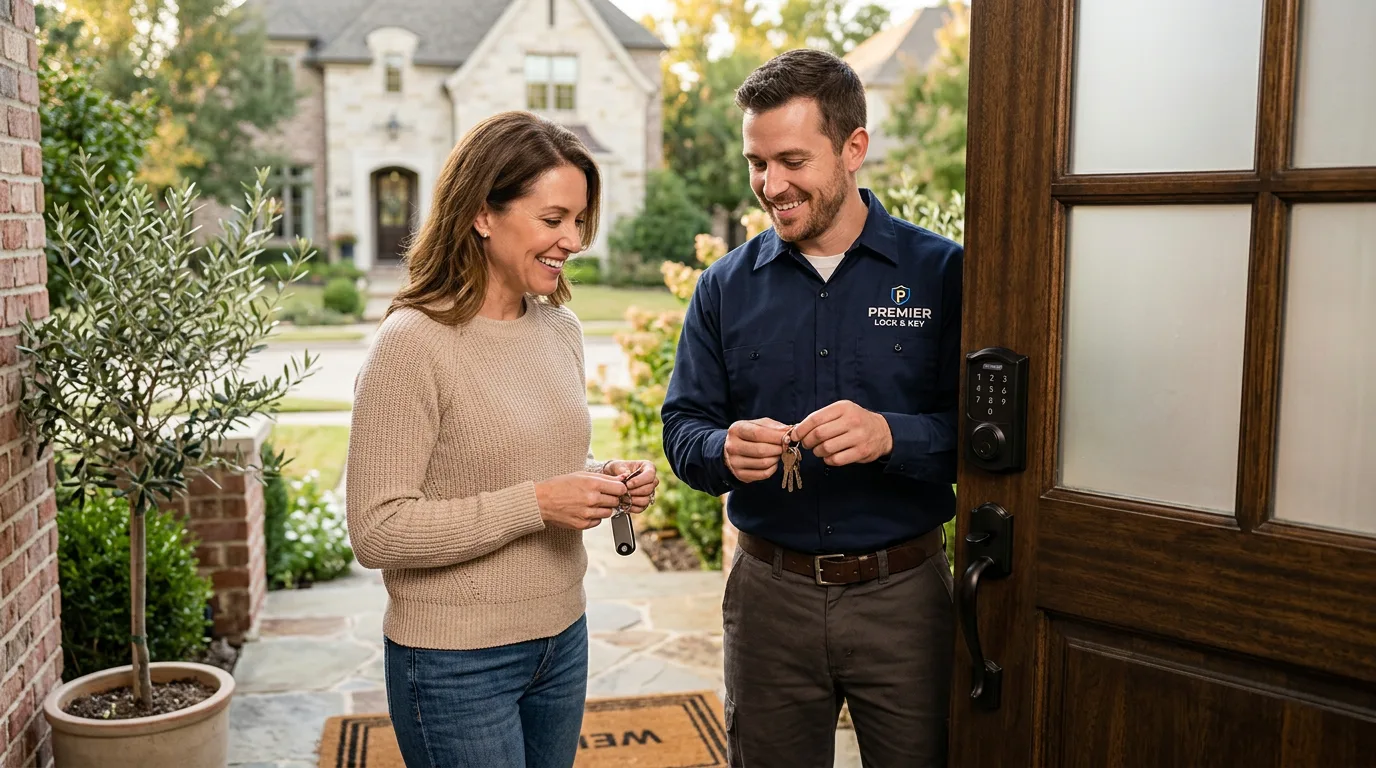
Once you have decided that the old keys cannot be trusted, you have two main options: rekeying or replacing the locks. Rekeying means changing the internal pins of the lock cylinder so that the old key no longer works, while a new key does. This is usually faster and less expensive than replacing the entire lock. It also lets you keep the same door hardware, so you do not have to worry about matching finishes or drilling new holes. Replacement, on the other hand, may be necessary if the locks are old, damaged, or of a low security grade. A good rule of thumb is to rekey if the locks are in good condition and you are satisfied with their security. Replace if the locks are worn or if you want to upgrade to a higher security grade, such as a Grade 1 deadbolt with a reinforced strike plate.
What Rekeying Involves
Rekeying is a straightforward process for a skilled locksmith. The locksmith removes the lock cylinder from the door, disassembles it, and replaces the pins so that a new key matches the new pin configuration. The old key will no longer work. If you have multiple locks that all used the same key, the locksmith can rekey each cylinder to match a single new key. This is convenient because you only need one key for all your exterior doors. When you are updating locks after a move, this is exactly the approach that makes the transition seamless. The same principle applies after losing keys: you want all your locks to work with one new key, and the old key to be useless.
When to Replace the Lock Entirely
There are situations where rekeying is not the best choice. If the lock cylinder is damaged, corroded, or of a low security grade, a replacement may be more cost-effective in the long run. For example, a basic tubular deadbolt offers less resistance to forced entry than a heavy-duty Grade 1 deadbolt. If your current lock is flimsy, losing your keys is an opportunity to upgrade. Replacing the lock also lets you choose a different style or finish if you want to change the look of your door hardware. Keep in mind that replacement takes longer and costs more than rekeying, so weigh the security benefits against the extra expense.
The Importance of the Strike Plate
Many homeowners focus only on the lock itself and forget about the strike plate. The strike plate is the metal piece on the door frame that receives the deadbolt or latch. If the strike plate is held in place by short screws, a determined intruder can simply kick the door open, bypassing the lock entirely. After losing your keys, while you are already thinking about security, check the strike plates on all exterior doors. If they are fastened with screws shorter than one inch, replace them with longer screws that penetrate deep into the door frame. This small upgrade makes a dramatic difference in how well the door resists forced entry.
Upgrading Your Deadbolt
A deadbolt is a separate lock that uses a bolt to secure the door, rather than a spring-loaded latch. If your exterior doors do not already have deadbolts, adding one is a smart move. A single-cylinder deadbolt is operated by a key from outside and a thumb turn from inside. A double-cylinder deadbolt requires a key on both sides, which can be a safety concern in an emergency but offers more security against someone breaking a window and reaching in to turn the thumb turn. Whichever type you choose, make sure it is a Grade 1 or Grade 2 lock. The security grade is usually stamped on the box or the lock body. Lower grades are fine for interior doors but not for exterior security.
Digital and Smart Lock Options
If you are already rekeying or replacing locks, you might consider a smart lock. These locks let you enter using a code, a smartphone app, or even your fingerprint. They eliminate the need for physical keys altogether, which means losing keys becomes a non-issue. However, smart locks have their own risks: they require batteries, can be vulnerable to hacking, and may not be as durable as a high-quality mechanical lock. If you choose a smart lock, look for one with a backup key override, so you can still get in if the battery dies. Also, check that it has a manual deadbolt that can be locked from inside without power. For many people, a combination of a high-security deadbolt and a smart lock gives the best of both worlds.
What to Do While You Wait for a Locksmith
If you have called a locksmith but they cannot arrive for a few hours, you need to secure your home in the meantime. If you have a spare key that works, use it. If not, and you had to force entry, try to board up any broken windows or doors. At the very least, lock all interior doors and set any alarm system you have. If you live in an apartment, inform the building manager. If you are in a house, let a trusted neighbor know the situation so they can keep an eye out. The goal is to reduce the window of vulnerability before the locksmith arrives to rekey or replace the locks.
Preventing Future Key Loss
Once your locks are sorted, think about how to avoid this situation again. One practical step is to create a spare key plan. Give a spare to someone you trust who lives nearby. Do not hide a key under a mat or a fake rock - those are the first places a burglar looks. A better hiding spot is inside a locked key box mounted out of sight. Another option is to install a keyless entry system on at least one door, so you can always get in with a code even if you lose your keys. Finally, get into the habit of always putting your keys in the same spot when you come home. A small hook by the door or a designated bowl can save you a lot of trouble.

When to Call a Professional
Rekeying a lock is not a beginner DIY project. The pins inside a lock cylinder are tiny and easy to lose, and reassembling them incorrectly can ruin the lock. If you are not experienced with lock mechanisms, call a mobile locksmith. They have the tools and training to do the job quickly and correctly. The same goes for replacing a deadbolt or upgrading a strike plate. A professional can also inspect your other door hardware and point out any weak spots you might have missed. When you are updating locks after a move or after losing keys, a locksmith visit ensures everything is done right the first time.
Losing your keys is stressful, but it does not have to leave your home insecure. By assessing the risk, deciding whether to rekey or replace, and reinforcing your door hardware, you can restore your peace of mind. The key is to act quickly and methodically. Once the locks are changed and the new keys are in hand, you can move forward knowing your home is as safe as it was before - and maybe even safer.